Friday, January 21, 2022

Election 2022 special: Public transport upgrades by seat - Part 2 The marginals


Two weeks ago I described the political benefits of public transport service upgrades (call this Part 0). Last week I presented twelve public transport service upgrade packages that were relatively economical, met real needs and would benefit many voters (Part 1). These were mostly skewed towards politically marginal seats - that is those with a margin of 6% of less. 

Today in Part 2 I'll discuss these marginal seats individually, listing each of last week's 12 service upgrade packages that will benefit them. To save repetition I'll just refer to them by number with a link to last week's items so you can read more about them.

I’ll also throw in some more localised upgrades that didn’t make last week’s list. These are considered lower priority but could still address a local issue that could come up in a particularly focused local campaign, especially if the seat is considered politically important. These concentrate on service but  infrastructure such as train and tram extensions get mentioned where featured in previous campaigns or are widely advocated locally.     

This seat by seat information could be useful for a candidate or party who wishes to wage an especially regionally based campaign.  

Labor marginals (less than 6% notional margin) 

Labor currently has 55 seats in the 88 seat Legislative Assembly. This compares to 27 for the Coalition parties. Because of its big 2018 win Labor can lose all its current marginal seats and still retain office.  However the Coalition opposition needs to win all these (and more) to govern. 

In seats like these the opposition may first propose something it thinks is popular. Then, especially if the promise is cheap (like many here!) or its position is weaker than initially thought, the government might match it to neutralise any opposition advantage. 

Even if it expects to be re-elected there is still some benefit for Labor to actively campaign for a strong vote everywhere to maximise its Legislative Council representation with a majority (or at least a workable minority) to pass its bills. This is why parties should not completely dismiss promising transport upgrades in less marginal seats (which I'll discuss next week). 

Anyway, on to the seats. 

Hastings (ALP 0.4% but currently Liberal held)

A mixed peri-urban seat made harder for the Liberals to retain by an unfavourable redistribution. However even a small anti-Labor swing will be enough for them to do so. Area is politically marginal with a mix of Liberal leaning semi-rural small-holding dwellers and retirees plus more Labor leaning lower to middle income earners priced out of areas nearer Melbourne. Train and bus services are typically infrequent and Hastings abuts two other marginal seats, hence the upgrade package mentioned last week. Existing Liberal MP Neil Burgess will retire with Briony Hutton their nominee. 

Melbourne-wide service initiatives (see Part 1 for details)

* 11: Peninsula and Westernport Transport Action

Potential additional local initiatives (not in Part 1 above)

* Further local bus reform including a low frequency cross-peninsula bus between Mornington and Hastings (that could mop up coverage gaps). 

* Baxter rail electrification may come up given the Coalition promised it in 2018 and it featured in the 2019 federal election campaign. It may get a run in both federal and state campaigns this year.  

Hawthorn (ALP 0.4%)

A traditionally Liberal seat that was a surprise Labor win in 2018. Generally high incomes but apartment construction is changing demographics towards a younger professional skew as older residents die or sell up to release home equity to live. Often a developer buys the house and builds units or townhouses. The Labor member is John Kennedy who goes everywhere by public transport. He faces a battle with respected former Hawthorn Liberal MP John Pesutto a good chance with just the slightest anti-Labor swing.   

Melbourne-wide service initiatives (see Part 1 for details)

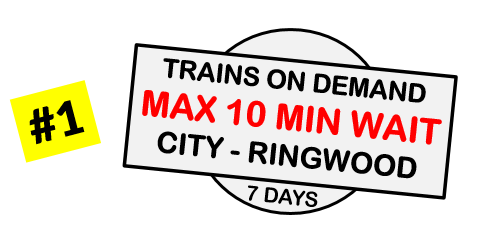
* 1: Belgrave/Lilydale line more trains more often / 10 minute maximum waits. 

* 7: Strategic bus connections / filling the missing gaps

* 9: Weekend bus boosts

* 12: Tram service refresh.

Potential additional local initiatives (not in Part 1 above)

* Extension and upgrade to bus 609 to provide a useful Chandler Hwy service.  


Nepean (ALP 0.6%)

Like Hawthorn a traditional Liberal seat that no one expected would fall to Labor in 2018. Unlike Hawthorn Nepean is far outer suburban fringe and peri-urban with most population in a narrow strip along the bay. Peninsula people don't always regard themselves as being in Melbourne, especially when they were subject to the tighter metropolitan COVID restrictions in 2020. Currently held by Chris Brayne, the house's youngest MP. Catchment includes a mixture of suburban type and peri-urban development. Home to mostly white people of a wide range of incomes, ranging from Capel Sound strugglers to Sorrento silvertails, with a high senior percentage. Public transport is rudimentary with little coverage for those away from the long 788 bus (which got an upgrade in late 2021). Nepean's Liberal candidate is not yet known but tennis star Sam Groth has been talked about. 

Melbourne-wide service initiatives (see Part 1 for details)

* 11: Peninsula and Westernport Transport Action

Potential additional local initiatives (not in Part 1 above)

* Upgraded local bus services with longer operating hours and days of operation. Bus upgrades are proposed for February 2022 but operating hours are still not useful on routes with finishes as early as 3 or 4pm on weekdays and only patchy weekend service. In particular longer hours are needed on the 787 and Rosebud FlexiRide and more frequency on the 887 express bus. 

* Baxter rail electrification, while outside the seat, may interest some in Nepean given the distance people are from frequent trains at Frankston and the parking pressures there. 


Ashwood (ALP 2.1% - new seat)

An established inner to middle eastern suburban predominantly middle to upper income catchment. If you own a home here you've got it made. Area has mostly been reliable for the Liberal Party however it swung to Labor in 2018. Undergoing some densification. This is a new seat name due to redistribution in the area. The Liberal Party has put forward Asher Judah but there are some doubts over this preselection at the time of writing. 

Melbourne-wide service initiatives (see Part 1 for details)

* 5: Suburban Rail Loop East SmartBus Stage 1 / Linking the South-east

* 6: SmartBus 2.0 / SmartBus more often to more places

* 7: Strategic bus connections / filling the missing gaps

* 9: Weekend bus boosts

* 10: Cheap & cheerful bus upgrades / Many upgrades in many places

* 12: Tram service refresh.


Box Hill (ALP 2.9%)

Another eastern suburb seat that the Coalition parties have generally called their own. Centred on a major densifying suburban hub with significant health, retail and education services. The centre of Melbourne's Chinese community. Most of the 12 packages featured last week would have some benefits for Box Hill due to its central location on the transport network. Seeking re-election will be Labor's Paul Hamer who is a civil engineer, former transport planner and author of research papers on parking policy. 

Melbourne-wide service initiatives (see Part 1 for details)

* 1: Belgrave/Lilydale line more trains more often / 10 minute maximum waits. 

* 5: Suburban Rail Loop East SmartBus Stage 1 / Linking the South-east

* 6: SmartBus 2.0 / SmartBus more often to more places

* 7: Strategic bus connections / filling the missing gaps

* 9: Weekend bus boosts

* 10: Cheap & cheerful bus upgrades / Many upgrades in many places

* 12: Tram service refresh.

Potential additional local initiatives (not in Part 1 above)

* Simplify bus routes in Blackburn North area with local review as current network is complex and often with low service levels.  


Pakenham (ALP 3.0% - new seat)

An outer growth area that has needed a new seat to be created. Many first homebuyers and increasingly multicultural. New housing is increasingly distant from railway stations but bus services are limited. Being a new seat there is no incumbent with local recognition. Instead Labor will seek to put Emma Vulin, one of Daniel Andrews electorate officers, into the seat. Liberal candidate may be local architect David Farrelly, who opposed Pakenham Skyrail in 2018. 

Melbourne-wide service initiatives (see Part 1 for details)

* 3: Pakenham/Cranbourne line more trains more often / maximum waits slashed.

* 8: Growth area logical extensions

* 10: Cheap & cheerful bus upgrades / Many upgrades in many places

* 11: Peninsula and Westernport Transport Action

Potential additional local initiatives (not in Part 1 above)

* A general local bus network review with simplified routes and increased residential and industrial area coverage. More frequent service as some waits are longer than the 60 minute 'minimum standard'. 


Ringwood (ALP 3.5%)

Established outer eastern area generally Liberal voting in all but the worst elections for them (eg 2018). Undergoing development in town centre. Anglo middle class demographics with higher incomes in Ringwood North. Areas east of Ringwood have low train frequencies and limited bus services that have not been reviewed for years. The Liberal Party will be campaigning hard in Ringwood especially as Labor incumbent Dustin Halse has announced he will not be seeking re-election. The Liberals Cynthia Watson is likely to be up against Burwood Labor MP Will Fowles (whose seat was abolished in the redistribution). If the Coalition can't win a seat like Ringwood back they have no hope in winning the state. 

Melbourne-wide service initiatives (see Part 1 for details)

* 1: Belgrave/Lilydale line more trains more often / 10 minute maximum waits. 

* 6: SmartBus 2.0 / SmartBus more often to more places

* 7: Strategic bus connections / filling the missing gaps

* 9: Weekend bus boosts

* 10: Cheap & cheerful bus upgrades / Many upgrades in many places

Potential additional local initiatives (not in Part 1 above)

* Split bus route 380 to simplify service. Extend Sunday evening service until 9pm. The current route is confusing. It could revert to the previous arrangement where the northern half operated as one route number and the southern half on another route number. Buses could continue to through-route as now. Extending to the 9pm minimum standard finish time would make buses more useful in the area.


* Operate Route 740 all the time, not just peak periods. Do in conjunction with local network review. Area needs more direct and easy to understand full-time bus network. Having peak-only routes just adds confusion.

* Simplify the complex 736 by having a different route number for eastern and western portions. Currently the route is like a sharp hair pin that is confusing to travel on as it starts quite near where it finishes. Splitting into two route numbers at Glen Waverley Station would simplify its use. 

* Local area network review to simplify routes and expand coverage in poorly served areas. Some areas around Ringwood have poor local bus coverage. Some routes may occasionally deviate, making the network hard to understand. Area has had little significant bus route reform in recent years.


South Barwon (ALP 3.9%)

Geelong southern suburban seat not technically in Melbourne but includes some who commute to Melbourne. Includes new housing area such as Armstrong Creek whose residents value Surf Coast proximity at affordable prices. Urban frontier seats like this, where there has been a large redistribution and/or where a high proportion of voters lived at a different address four years ago can be quite difficult to predict and campaign in. Local Labor member is Darren Cheeseman. 2010 - 2018 South Barwon MP Andrew Katos will be Cheeseman's challenger. 

Melbourne-wide service initiatives (see Part 1 for details)

* 4: Geelong and Melton weekend trains more often / waits halved (or better).

Potential additional local initiatives (not in Part 1 above)

* Local bus coverage extensions and frequency upgrades to accommodate suburban growth and provide better feeders to local stations and shopping centres. 

* Upgrade local bus routes with longer hours of operation and better weekend frequencies, particularly to Torquay/Jan Juc over summer. May relieve traffic pressures in the area by making bus travel a real option. 


Melton (ALP 5.6%)

Outer growth area and 1970s satellite city considered to have been neglected for many years. Now attracting fast suburban growth but fewer transport, education, health and community facilities than other outer growth areas that seemed to get more. Also feeling unloved due to toxic waste dumping in the area. There have however been new railway stations, train service upgrades, more rail plans and a  proposal for a new hospital. Favoured for its affordable housing within commuting distance of Melbourne CBD but has relatively few local jobs. Labor had major problems in Melton due to a rorting scandal involving former MP Don Nardella in 2017. Nardella didn't stand in 2018 with newcomer Steve McGhie standing instead. McGhie won then but on a low primary vote. McGhie has had some time to build a local profile and memories of Nardella may have faded in 2022. Despite the seat being historically Labor, the Liberals may still have their eyes on western growth area seats like Melton, hoping for results similar to that obtained by their NSW colleagues in Western Sydney.  

 Melbourne-wide service initiatives (see Part 1 for details)

* 4: Geelong and Melton weekend trains more often / waits halved (or better).

* 7: Strategic bus connections / filling the missing gaps

Potential additional local initiatives (not in Part 1 above)

* Major bus network review in area with buses every 20 minutes or better Monday - Sunday to station via Coburns Rd and Station Rd and a simpler network. Coverage also needs to be expanded. This upgrade would make buses more useful for travel to major local destinations such as Melton Station and Woodgrove Shopping Centre. The frequencies suggested are like those operating in similar growth areas such as Werribee/Tarneit and Cranbourne that received new bus networks in 2015 and 2016.

* Standardise Melton FlexiRide to operate Saturday service hours on public holidays (like regular bus routes)


* Amenity upgrades including improvements at Melton station, bus interchanges and walking access to stops. Improved presentation, shelter, information and pedestrian access could make bus and train services more usable in the area. 

* Melton rail electrification. Has been talked about for years with continued rapid urban growth. Could potentially deliver capacity and speed benefits for the rail corridor out to Ballarat by separating suburban and regional passengers. However it has been bumped back by the more glamorous (and elite-supported) airport rail that could take its Sunshine - City train paths in the absence of other capacity enhancements.


Richmond (ALP 5.9%)

Inner suburban densely populated left-wing area with a diverse population including middle class gentrifiers and low income renters in government housing. Drug policy is a significant local issue with the injecting room in the area. Well served by trains and trams but limited bus connections for access in some directions. Labor's Richard Wynne will be retiring, meaning that there will be no incumbent with the benefit of personal recognition recontesting in 2022. Hence you can expect Richmond to be a priority for Greens and possibly socialist groups. Labor's candidate will be electorate officer Lauren O'Dwyer.

Melbourne-wide service initiatives (see Part 1 for details)

* 1: Belgrave/Lilydale line more trains more often / 10 minute maximum waits. 

* 6: SmartBus 2.0 / SmartBus more often to more places

* 7: Strategic bus connections / filling the missing gaps

* 9: Weekend bus boosts

* 12: Tram service refresh.

Potential additional local initiatives (not in Part 1 above)

* Upgrade Mernda train line to operate every 10 minutes during the day. Extensions to South Morang and Mernda have increased line patronage. 'Turn up and go' train frequencies relieves pressure on nearby trams and provides area with a fast and frequent transport option. Existing 20 minute frequency is low for a train line through a continuously urban area.


* Boost Mernda and Eltham evening train frequencies from every 30 to every 20 minutes. The current 30 minute service is low for a major metropolitan line. Existing timetables reflect 1970s cutbacks and not modern travel pattern. Comparable lines in Sydney operate every 15 minutes at night.

* Boost Mernda and Eltham Sunday morning train frequency to 20 minutes. Current 40 minute service is worse than comparable length lines in the south and east (every 30 minutes). Changing lifestyle patterns have increased demand for early Sunday travel. Comparable lines in Sydney operate every 15 minutes on Sunday mornings.


Green marginals (less than 6% notional margin)


Melbourne (Green 1.6%)

Includes the CBD, CBD fringe areas (eg Docklands) and certain inner suburbs like Kensington and Fizroy. High proportion of apartment dwellers and lower than average car ownership. CBD businesses have been hit hard by COVID lockdowns and the white collar trend towards working from home for CBD workers. Many renters with some underprivileged areas. Ellen Sandell will try to hold the seat for The Greens but her margin is slim. 

Melbourne-wide service initiatives (see Part 1 for details)

* 6: SmartBus 2.0 / SmartBus more often to more places

* 9: Weekend bus boosts

* 12: Tram service refresh.

Potential additional local initiatives (not in Part 1 above)


* Added trips on bus route 404 between Footscray and Moonee Ponds including 20 min interpeak weekday frequency, longer hours and new Sunday service.

* Further frequency improvements for bus route 505, particularly off-peak and weekends.  


* Tram network reform including rerouting 12 via LaTrobe St, more trams to the western CBD and reducing the number of routes on Swanston St. Would provide a full-time tram along LaTrobe St and more continuous services via Spencer St. Shifting routes to the western CBD would respond to jobs and activity. Reducing the number of separate routes on Swanston St could allow higher frequencies (eg upgrade from 12 to 10 min interpeak) on each route with more turn-up-and-go service.

* Pedestrian connectivity improvements and multimodal maps at key points to improve interchange. Would increase patronage and passenger confidence when making connections.


Brunswick (Green 2.1%)

Left-wing grungy but trendy inner suburban seat with a mix of gentrifiers and renters. Popular with students and artists with vibrant cultural scene. Lower than average car ownership and higher than average cycling. Public transport is strongly north-south with only weak east-west bus links that are nevertheless quite well used and cheap to upgrade. Area has history of independent militant left activism that placed it at odds with previous Labor governments (eg plans to close the Upfield line and the 1990 tram dispute). Local member is Tim Read who has successfully advocated for modest upgrades to the 505 bus (when Parkville Gardens was in his seat). 

Melbourne-wide service initiatives (see Part 1 for details)

* 6: SmartBus 2.0 / SmartBus more often to more places

* 9: Weekend bus boosts

* 10: Cheap & cheerful bus upgrades / Many upgrades in many places

* 12: Tram service refresh.

Potential additional local initiatives (not in Part 1 above)

* Upgrade Upfield line train frequency from every 40 to 20 min on Sunday mornings. Would halve maximum waits (from 40 to 20 min) in a densifying corridor.


* Boost Upfield line trains from every 30 min to every 20 min at night. Would reduce evening waits and provide generally better connectivity with trams and buses.  

* Improve evening tram 19 frequency from 20 to 15 min, with greatest priority for early evenings. 
Service drops to every 20 min too early for a well used route. Keep daytime frequency running longer. 

* Increase weekend frequency on bus routes 504 and 510 and potentially extend latter to Heidelberg. Popular direct bus routes but weekend frequency drops off. Upgrades would make a lot of cross-suburban trips easier. A 510 Heidelberg extension would improve access to the hospitals. 


Liberal marginals (less than 6% notional margin) 


Caulfield (Liberal 0.1%)

Comprises generally neat and respectable well-housed neighbourhoods unlike closer in Prahran or Richmond. Mostly high income south-eastern inner suburban seat normally reliable for the Liberal Party. However has a significant renter demographic in walk-up apartments around areas like Glen Huntly. Most has trains or trams nearby but buses are limited, especially in the east of the seat. David Southwick will recontest this seat for the Liberal Party. 

Melbourne-wide service initiatives (see Part 1 for details)

* 2: Sandringham line more trains more often / halved maximum waits.

* 3: Pakenham/Cranbourne line more trains more often / maximum waits slashed.

* 6: SmartBus 2.0 / SmartBus more often to more places

* 7: Strategic bus connections / filling the missing gaps

* 9: Weekend bus boosts

* 12: Tram service refresh.

Potential additional local initiatives (not in Part 1 above)

* Extend operating hours and improve weekend frequencies on bus route 605. Current timetable has early evening finishes, late Sunday morning starts and infrequent Sunday service. 


Eildon (Liberal 0.4%)

Peri-urban seat on Melbourne's north-eastern fringe. Includes many middle-aged lifestylers on acreages. May be affluent professionals or retirees. Reliable for the Liberal Party but margins can be small. Stretches deep into rural and high country areas but most voters would be within 60-70 km of Melbourne.

Melbourne-wide service initiatives (see Part 1 for details)

* 1: Belgrave/Lilydale line more trains more often / 20 minute maximum waits. 

Potential additional local initiatives (not in Part 1 above)


* Boost weekend (especially Sunday) frequency on Route 685 to Healesville and Healesville Sanctuary. Provide consistent routing in conjunction with network reforms to routes like 684, 686 and 687. Current routes can have inconsistent deviations and destinations. Note that the state government already has a bus review planned for the area.  

* Add trips on the popular Route 683 to Warburton. A popular route that may justify extra services.

* Simplify Night Network so that Route 965 is replaced with additional trips on Routes 683 and 685. Current usage is low. Replacing with additional services on regular routes tends to increase usage by making buses simpler to use, especially for early weekend morning travellers. 

* Simplify Route 684 with simpler holiday timetables. Currently Route 684 operates a non-standard public holiday timetable that can confuse passengers. Reappraise times in conjunction with a local network review. 


Sandringham (Liberal 0.4%)

High income older skew predominantly Anglo-saxon bayside seat. Established suburbia with some townhouse type infill. Pleasant beachside living for those seeking a metropolitan but not intensely urban lifestyle. Served with north-south trains but complex and infrequent buses. Held by Brad Rowswell for the Liberal Party but on a slim margin that they would want to increase.

Melbourne-wide service initiatives (see Part 1 for details)

* 2: Sandringham line more trains more often / halved maximum waits.

* 5: Suburban Rail Loop East SmartBus Stage 1 / Linking the South-east

* 7: Strategic bus connections / filling the missing gaps

* 9: Weekend bus boosts

* 12: Tram service refresh.

Potential additional local initiatives (not in Part 1 above)

* Upgrade Route 708 service. Boost early weeknight and weekend daytime frequency from every 60 to every 30 - 40 minutes. A route that connects many local destinations including Southland Shopping Centre. Would not require more buses as weekday service is already every 30 min.

* Bus network simplification in Beaumaris area involving the currently complex 600 / 922 / 923 cluster and possibly other routes as well. 


Brighton (Liberal 0.6%)

A very high average income bayside seat that has reliably returned a Liberal member. However it includes young professional renters in Elwood area that are less likely loyal Liberal voters. Seat also has some lower income pockets around Hampton East. Served by the north-south Sandringham line. Buses can be indirect and sometimes infrequent. Incumbent James Newbury will want to do better in 2022 than he did in 2018 when he nearly lost to a young Labor first-time candidate with a tiny campaign budget. 

Melbourne-wide service initiatives (see Part 1 for details)

* 2: Sandringham line more trains more often / halved maximum waits.

* 6: SmartBus 2.0 / SmartBus more often to more places

* 7: Strategic bus connections / filling the missing gaps

* 9: Weekend bus boosts

* 10: Cheap & cheerful bus upgrades / Many upgrades in many places

* 12: Tram service refresh.

Potential additional local initiatives (not in Part 1 above)

* Upgrade Route 708 service. Boost early weeknight and weekend daytime frequency from every 60 to every 30 - 40 minutes. A route that connects many local destinations including Southland Shopping Centre. Would not require more buses as weekday service is already every 30 min.

* Bus network simplification in the Elsternwick / Elwood / Brighton area involving the currently complex 600 / 922 / 923 cluster, an upgraded 606 to Port Melbourne and the relatively poorly used 603 and 604.  


Croydon (Liberal 0.6%)

Outer eastern suburbs seat popular with UK migrants and their families who came out in the '60s and '70s. Significant retiree and skilled trades demographics in area. Relatively low housing density with few apartments. Professionals may own acreages in surrounding areas with the train providing an easy commute. Although an outer area Croydon doesn't have the scale of population growth that areas a similar distance from Melbourne to the west and north have. Hence the 2022 redistribution has led to changed boundaries as seats were transferred from slow to fast growing areas. MP David Hodgett (who as shadow transport minister in 2017 proposed trains every 10 minutes) will be recontesting Croydon for the Liberal party. 

Melbourne-wide service initiatives (see Part 1 for details)

* 1: Belgrave/Lilydale line more trains more often / 20 minute maximum waits. 

* 8: Growth area logical extensions

* 9: Weekend bus boosts

* 10: Cheap & cheerful bus upgrades / Many upgrades in many places

Potential additional local initiatives (not in Part 1 above)

* Split bus route 380 to simplify service. Extend Sunday evening service until 9pm. The current route is confusing. It could revert to the previous arrangement where the northern half operated as one route number and the southern half on another route number. Buses could continue to through-route as now. Extending to the 9pm minimum standard finish time would make buses more useful in the area. 


* New Ringwood - Eastfield Rd - Croydon bus to remove a large coverage hole. Would provide new coverage and allow the Route 737 to be run via a consistent Dorset Rd route instead of having to deviate. 

* Local area network review to simplify routes and expand coverage in poorly served areas. Some areas around Croydon have poor local bus coverage. Some routes may occasionally deviate, making the network hard to understand. Area has had little significant bus route reform in recent years. Would include review of Flexiride, especially in areas where there are overlaps with fixed routes, or where fixed routes could easily be extended to replace a Flexiride. 


Glen Waverley (Liberal 0.7% - new seat)

Usually a reasonably safe Liberal-voting area. Includes established middle class retirees and successful working families, often of Asian heritage, who favour the area due to the reputation of local schools. Has a train, tram and buses of varying service levels. The southern part of the seat is also convenient to Monash University Clayton.  

Melbourne-wide service initiatives (see Part 1 for details)

* 5: Suburban Rail Loop East SmartBus Stage 1 / Linking the South-east

* 6: SmartBus 2.0 / SmartBus more often to more places

* 7: Strategic bus connections / filling the missing gaps

* 9: Weekend bus boosts

* 10: Cheap & cheerful bus upgrades / Many upgrades in many places

* 12: Tram service refresh

Potential additional local initiatives (not in Part 1 above)

* Upgrade Glen Waverley train line to operate every 10 minutes during the day. A frequency upgrade would relieve pressure on the busy Dandenong and Ringwood lines and allow improved connectivity to the Monash precinct.


* Upgrade Glen Waverley train line to operate every 20 minutes on evenings and Sunday mornings. Services are currently only every 30 minutes. This upgrade will make trains more useful for more trips over more of the day and week. Comparable lines in Sydney operate every 15 minutes at these times.

* Improve shoulder peak, Sunday morning and evening services on tram route 75. Catchment is undergoing population densification along tram corridors. Service upgrade would better align trams with modern travel needs. 

* Increase interpeak frequency to 20 min and weekend frequency to 20 - 30 min on Route 693. Extend route to Chadstone Shopping Centre. Would provide improved east-west connectivity across a wide and poorly served area. Potential to do in conjunction with reform to other routes including 742 and 753. 

* Simplify the complex 736 by having a different route number for eastern and western portions. Currently the route is like a sharp hair pin that is confusing to travel on as it starts quite near where it finishes. Splitting into two route numbers at Glen Waverley Station would simplify its use. 

* Simplify local bus routes in area east of Springvale Rd, especially between High St Road and Ferntree Gully Rd. Currently has routes that go different ways during peak and off-peak (eg 754). Reform here could be done in conjunction with improvements in Rowville, Mulgrave and Dandenong North. 


Berwick (Liberal 1.0% - new seat)

A new south-eastern growth area seat including rural areas to the north, established areas (with a train) in the middle and poorly served new 'mortgage belt' housing areas to the south. Old Berwick is regarded as the Toorak of the outer south-east. People in the area aspire to buy there but mostly can only afford Narre Warren or (newer) Clyde with a desire for better transport to Berwick. Enjoys better health and education facilities than most in the outer south-east. Also has a historic main street for local shopping with Narre Warren's Fountain Gate a drawcard for larger items. Nominally Liberal. Their candidate will be Brad Battin who is the current member for the abolished seat of Gembrook. 

Melbourne-wide service initiatives (see Part 1 for details)

* 3: Pakenham/Cranbourne line more trains more often / maximum waits slashed.

* 8: Growth area logical extensions

* 9: Weekend bus boosts

* 10: Cheap & cheerful bus upgrades / Many upgrades in many places

Potential additional local initiatives (not in Part 1 above)

* Review local complex bus routes to simplify, extend coverage and enable improved frequency. In particular split the complex 834/835 loop and join existing routes to provide a Berwick - Clyde - Cranbourne bus. Berwick area has had some new bus routes added but hasn't had a comprehensive area network review for at least 10 years. 


Bayswater (Liberal 1.1% - currently Labor held)

A 1960s - 1980s established outer eastern suburb seat covering much of the City of Knox. Includes several major shopping centres and a light industrial area around Bayswater. Has limited frequency trains and never got a full bus network. Bayswater is currently Labor held by Jackson Taylor who faces an uphill battle due to the unfavourable redistribution and competition from a known name in Nick Wakeling MP whose Ferntree Gully seat has been abolished. Taylor has been a very active first term MP and will have a profile in 2022 that he lacked in 2018. That may be enough to ward off a strong challenger unless there is a significant anti-Labor statewide swing.   

Melbourne-wide service initiatives (see Part 1 for details)

* 1: Belgrave/Lilydale line more trains more often / 20 minute maximum waits. 

* 5: Suburban Rail Loop East SmartBus Stage 1 / Linking the South-east

* 6: SmartBus 2.0 / SmartBus more often to more places

* 10: Cheap & cheerful bus upgrades / Many upgrades in many places

Potential additional local initiatives (not in Part 1 above)

* Major bus network review in area with simpler, more direct and more frequent services seven days per week. Reroute 664 via Scoresby Rd to Knox City to fill a long-standing service gap on Scoresby Rd. Upgrade existing routes to 7 days/week, remove confusing deviations, add more direct routes and boost service frequencies. Many areas around Knox were settled 30 - 40 years ago but are still waiting for a regular bus service. Existing services are indirect, infrequent and sometimes duplicate one another. Major roads (eg Scoresby Rd) have as little as one bus per day over their entire length.

* On the infrastructure side, there is some local interest in a tram 75 extension to Knox City with this being promoted by the Liberal candidate. 


Evelyn (Liberal 1.9%)

Eastern fringe Liberal voting area. Semi-rural areas in the east but the bulk of the population is in suburbs such as Mooroolbark, Chirnside Park and Lilydale. Fastest growth in 1960s - 1980s with relatively slow subsequent population growth compared to outer areas in the west, north and south-east. Ethnically homogeneous with a high rate of home and car ownership. Local public transport has been stuck in a time-warp with few service upgrades in recent years although there have been some level crossing removals and new stations. Currently represented by Bridget Vallence for the Liberal Party.

Melbourne-wide service initiatives (see Part 1 for details)

* 1: Belgrave/Lilydale line more trains more often / 20 minute maximum waits. 

* 9: Weekend bus boosts

* 10: Cheap & cheerful bus upgrades / Many upgrades in many places

Potential additional local initiatives (not in Part 1 above)

* Boost weekend (especially Sunday) frequency on Route 685 to Healesville and Healesville Sanctuary. Provide consistent routing in conjunction with network reforms to routes like 684, 686 and 687. Current routes can have inconsistent deviations and destinations. Note that the state government already has a bus review planned for the area.  


* Add trips on the popular Route 683 to Warburton. A popular route that may justify extra services.

* Simplify Night Network so that Route 965 is replaced with additional trips on Routes 683 and 685. Current usage is low. Replacing with additional services on regular routes tends to increase usage by making buses simpler to use, especially for early weekend morning travellers. 

* Simplify Route 684 with simpler holiday timetables. Currently Route 684 operates a non-standard public holiday timetable that can confuse passengers.


Bass (Liberal 2.4% - currently Labor held)

Mostly semi-rural or rural seat around Western Port but abuts fast-growing rural-urban fringe areas near Cranbourne and Pakenham. Existing public transport is V/Line coach and a few metropolitan bus routes. Some would drive to stations on the Cranbourne / Pakenham line. Incumbent Jordan Crugnale will be recontesting Bass for Labor. The redistribution has been unfavourable for her but she has the benefit of an existing strong local profile. Several new bus services have been added in the area while she's been the local member.  

Melbourne-wide service initiatives (see Part 1 for details)

* 3: Pakenham/Cranbourne line more trains more often / maximum waits slashed.

* 11: Peninsula and Westernport Transport Action

Potential additional local initiatives (not in Part 1 above)

* Extend the Cranbourne rail line to Clyde with reformed and upgraded local buses. 

* Simplify and improve 776 bus from Frankston with more trips to Pearcedale including Sunday trips. Current route is complex and does not run 7 days per week. Should be done in conjunction with Frankston area network review. 

* Review Westernport Bay area bus network (eg Route 795 and V/line services) with a view to running simpler routes seven days per week. 

* Review the timetabling of the Stony Point train line and the Interisland ferry to improve connectivity in both travel directions on all days of the week and promote this as a travel option to French and Phillip Islands, especially from the Frankston area where it is quicker than driving.


Warrandyte (Liberal 4.2%)

Comfortable and relaxed with plenty of shade. A mix of semi-rural and high income / low density suburbia including neighbourhoods like Donvale, Doncaster East and Ringwood North. Older adult demographics often in big houses with adult children and all their cars still living at home. Though on this marginal seat list, it's hard to see the Coalition losing a seat like this (unless Victoria 2022 delivers a WA 2021 style landslide result). 

Melbourne-wide service initiatives (see Part 1 for details)

* 1: Belgrave/Lilydale line more trains more often / 20 minute maximum waits. 

* 6: SmartBus 2.0 / SmartBus more often to more places

* 9: Weekend bus boosts

* 10: Cheap & cheerful bus upgrades / Many upgrades in many places

Potential additional local initiatives (not in Part 1 above)

* Split bus route 380 to simplify service. Extend Sunday evening service until 9pm. The current route is confusing. It could revert to the previous arrangement where the northern half operated as one route number and the southern half on another route number. Buses could continue to through-route as now. Extending to the 9pm minimum standard finish time would make buses more useful in the area. 


Kew (Liberal 4.6%)

A traditional high income inner suburban 'blue ribbon' Liberal seat of particular interest in 2022 due to the escapades of former member Tim Smith. Undergoing population densification with more townhouses whose professional tenants may not share the voting intentions of their parents. Has strong tram and bus links but only limited north-south bus connectivity. Jess Wilson from the Business Council will be seeking to hold Kew for the Liberal Party. 

Melbourne-wide service initiatives (see Part 1 for details)

* 1: Belgrave/Lilydale line more trains more often / 10 minute maximum waits. 

* 6: SmartBus 2.0 / SmartBus more often to more places

* 7: Strategic bus connections / filling the missing gaps

* 9: Weekend bus boosts

* 10: Cheap & cheerful bus upgrades / Many upgrades in many places

* 12: Tram service refresh.

Potential additional local initiatives (not in Part 1 above)

* Upgrade bus route 609 to provide improved Chandler Hwy connection and extend all trips to Hawthorn Station. Operate 7 days per week. Current route runs a few trips per day only. Upgrade would complete a missing link for which demand is demonstrated (refer to traffic volumes on Chandler Hwy).


Rowville (Liberal 4.9%)

1960s - 1980s suburbia with main roads forming a coarse grid but often indirect residential streets between them. Many neighbourhoods never got a full bus network even at minimum standards of service making them some of the least served in Melbourne. Reliably returns Liberal members with the margin reduced in the 2018 election. Local MP is Kim Wells who has held it or a nearby seat since 1992. Wells advocated for public transport upgrades before the 2014 election but was instrumental in getting Stud Rd bus lanes removed a few years prior. 

Melbourne-wide service initiatives (see Part 1 for details)

* 1: Belgrave/Lilydale line more trains more often / 20 minute maximum waits. 

* 5: Suburban Rail Loop East SmartBus Stage 1 / Linking the South-east

* 6: SmartBus 2.0 / SmartBus more often to more places

* 9: Weekend bus boosts

* 10: Cheap & cheerful bus upgrades / Many upgrades in many places

Potential additional local initiatives (not in Part 1 above)

* Do local bus network review in Rowville and Lysterfield area encompassing resources from routes 681/682, 691, 754 and Rowville Flexiride.   Area has not had a real bus network review for years. The most recent change simply layered FlexiRide over an existing unchanged network. Reform should seek to deliver a simplified 7 day network with improved connections to surrounding attractions including Glen Waverley, Ferntree Gully and Knox City as well as adequate internal coverage. 


Mornington (Liberal 5.0%)

Regarded as a safeish Liberal seat with an older homogeneous middle class population. Suburban density in the west near the bay with a lower density in the east and south around Mt Martha. Large areas without bus coverage, particularly parts of Mt Martha and Mt Eliza. Currently held by the Liberals long-serving David Morris, the seat will be contested in 2022 by former federal MP Chris Crewther who defeated Morris in the party preselection. 

Melbourne-wide service initiatives (see Part 1 for details)

* 6: SmartBus 2.0 / SmartBus more often to more places

* 8: Growth area logical extensions

* 11: Peninsula and Westernport Transport Action

Potential additional local initiatives (not in Part 1 above)

* Review the local bus network with special attention paid to simplifying routes and closing coverage gaps in the area. Revised routes may include one via Moorooduc Hwy to provide a better connection to the Monash Peninsula campus and a cross-peninsula service to Hastings. 


Bulleen (Liberal 5.4%)

A high income eastern suburban seat held by Liberal leader Matthew Guy. Includes busier and developed areas around Doncaster Rd and quieter riverside areas around Templestowe. No trains or trams but a major beneficiary of frequent DART SmartBuses and SmartBus orbitals. 

Melbourne-wide service initiatives (see Part 1 for details)

* 6: SmartBus 2.0 / SmartBus more often to more places

* 7: Strategic bus connections / filling the missing gaps

* 9: Weekend bus boosts

* 10: Cheap & cheerful bus upgrades / Many upgrades in many places

Potential additional local initiatives (not in Part 1 above)

* Simplify local bus routes including operating all Route 279 trips the same way (to Doncaster) and, in conjunction with local network reforms, merge 281 and 293 into a single route via High St operating every 15 minutes. Also reappraise usage of all bus routes on Reynolds Rd with a view to merging to form a single direct route from Heidelberg Station to The Pines. Current buses are complex, do not all run 7 days and sometime have low patronage. A review would provide an opportunity to reappraise and simplify the network.  

* Public transport infrastructure projects mentioned in previous campaigns include a tram 48 extension to Shoppingtown and heavy rail to Doncaster.  


Conclusion

The above has been a seat by seat look at potential cost-effective public transport service upgrades for all Melbourne metropolitan seats with a margin of under 6%. 

Comments as welcome if you have any other service upgrade ideas. 

Next week in Part 3 I'll look at potential improvements in less marginal seats that could nevertheless swing in 2022. These are still of great interest since the Coalition needs to win a lot of these seats to win office. In other cases a hostile redistribution may trouble an incumbent member, such as with Prahran where Green incumbent Sam Hibbins may struggle against Labor. 


Others in this series

Election 2022 special: Public transport service upgrades by seat - Part 1 Metropolitan overview

Election 2022 special: Public transport service upgrades by seat - Part 2 The marginals (this one)

Election 2022 special: Public transport service upgrades by seat - Part 3 Less marginal seats

Election 2022 special: Public transport service upgrades by seat - Part 4 Safer seats

Election 2022 special: Public transport service upgrades by seat - Part 5 The safest seats 

Election 2022 special: Public transport service upgrade by seat - Part 6 Summary


NOTE: This item may be updated nearer the 2022 state election if interesting facts about seats and candidates come to hand. 


Tuesday, January 18, 2022

TT #149: PTV's journey planner - no good for COVID's reduced timetables

In my 2021 year in review I mentioned that we were substantially able to maintain public transport service levels at a time where other cities globally had cut theirs. The reason was that our funding mechanism was more robust with the government, not transit agencies or operators, taking the revenue risk for low patronage. 

Service cuts were however on the table in 2020 when the virus first hit. In March 2020 there was the possibility that services could be reduced to a Saturday timetable. I explored various options here. The biggest problem is that if we went to a Saturday bus timetable some bus routes would stop running completely since there are still a lot of suburban residential Monday - Friday only routes (and they are by no means all commuter express type routes that you might accept wouldn't run due to more working from home and alternative options). In other cases buses would only operate in the morning and not the afternoon as some buses (still) only have morning service on Saturdays. 

Fortunately none of this came to pass and services continued on their regular timetable. With one notable exception. For much of 2020 we had a curfew with no one allowed out between 9pm and 5am. Public transport services were greatly scaled back with already long 30 minute evening headways lengthened to 60 or even 90 minute gaps. More on that here. Regular evening timetables were restored shortly after the curfew was lifted. 

The situation is different now in 2022. People are mostly vaccinated now, reducing the chance that those contracting COVID have to go into intensive care. However case numbers have spiralled. Almost every Victorian would now know at least one person with COVID. So many people are in isolation and are unable to work at jobs that require their presence. Even getting a test to confirm your COVID status is a battle with rapid antigen tests difficult to find and/or very expensive due to federal government inaction. 

Hence we have a labour shortage affecting industries such as food processing, distribution and transport.  You can see the effects of shortages in almost every supermarket, notably the meat section. And, topical for this blog, the ability to run public transport timetables due to lack of drivers. 

Thus, what we largely avoided in 2020 and 2021 we have in 2022. That is reduced timetables on our public transport. Not due to funding issues (as in other countries) but non-availability of drivers.

Of long-term interest is the information systems that advise passengers of changed schedules. To be more useful than a simple paper timetable on a wall they need the meet the 'three Rs'. That is: 

1. Systems must be robust and reliable. That is even if there is a major disruption (or even a power failure) they should still work. This is a deficiency of the 'green button' system used on our railways which can sometimes get confused or not give a 'minutes to' indication. People depend on systems more when services are disrupted which is why it should be working then. If an information system only works when the service is operating smoothly then it is not worth having. 

2. Systems must be right. Accuracy must be several orders of magnitude better than the reliability of the service they are giving information about. Eg if trains show up 99% of the time then an information system that is 95% accurate is worthless. Instead you need it to be like 99.99% right so that people can rely on it. 

3. Thirdly you want the system to be responsive. If timetables have to be changed then you want to be able to upload them quickly (ie within 24 and preferably 12 hours) to get them out to passengers via website lookups and journey plans. Online ought to have made this easier. However apparently PTV has such convoluted data systems that the whole data set needs to be uploaded at once even if only a few timetables in it are changing. Uploading is not a trivial task and is only done once a week (on Fridays). If there's an error in the data (a risk magnified by the complex services we run, particularly for buses) it needs to wait until the following week's upload for the correct version to appear. It can take a long time to get information right, and in some cases, like Route 788's summer timetables, it hasn't happened at all. The data here drives the website  timetables and journey planner so it needs to be right. Especially when PTV keeps referring people to its journey planner, especially during disruptions.  

Once you've got the data issues and systems sorted there's a 4th R. This is real time information that you can spread out to more places. Arguably this is a sped up version of being responsive mentioned just above. 

Data management is a major (though too rarely officially acknowledged) problem with the Department of Transport and its PTV website. This is particularly apparent when services need to be changed at short notice or there are disruptions that require people to go different ways. 

In contrast with PTV's processes for timetable data, a bus operator can upload a simple pdf timetable to their website in moments. As indeed PTV sometimes resorts to when their systems break down. 

As an example, this week Transdev Melbourne uploaded PDF timetables for those bus routes that have reduced timetables due to the driver shortage. PDFs aren't always good for viewing on mobile devices and you don't want to necessarily save everything you wish to just casually view (for that an HTM format might be easier). PTV is also hosting the Transdev PDFs here.

Hence you've got effectively multiple versions of timetables on the PTV website. The currently in force temporary timetable PDFs and the out of date regular version uploaded via the regular process. The latter is what you get if you look up a timetable on the PTV website in the usual way or use the journey planner (whose results will show trips that aren't running). Hence if you do a journey plan for a route whose timetable is cut back (eg the 280/282 with about half its trips removed) the options presented will include some trips that are known not to run (ie they don't appear in the pdf timetables).

If you want to know about whether a specific trip is running PTV advice is instead to use the departures page. 

To its credit there is a disruption warning with a link to the page that tells you about the reduced timetables if you do plan a journey or look up an online timetable. However we know that people hate footnotes and don't always read them. And having to put up temporary PDFs, though better than nothing, is not a substitute for proper systems that enable faster uploading so that website timetables and journey planner results can be trusted as being the most current. 

Conclusion

Department of Transport managers and strategies go on a lot about 'simple connected journeys'. They don't always live up to this, at least for public transport. 

They really need to put in systems and processes to ensure that the PTV website does not contain multiple versions of the same data, linked only by easy to miss footnotes. And that they have online timetables and journey planner results that can be trusted, backed by accurate data that can be easily  revised and uploaded at least on a daily basis.  

Read other Timetable Tuesday items here

Friday, January 14, 2022

Election 2022 special: Public transport upgrades by seat - Part 1 Metropolitan overview

Back in 2019 I went through all Melbourne's marginal seats to identify cost-effective public transport service upgrades. A few have already been done. Most though have not and remain desirable today. 

The main difference since is there's been a redistribution. Seat boundaries have been redrawn with some districts created, abolished, renamed or merged. The shift reflects relative population changes with high growth in the outer west, north and south-east meaning more seats at the expense of established areas (mostly in the east). This is needed to keep representation close to 'one vote one value' with similar numbers of people in each seat.  

Redistributions often change seat margins. Some seats have become less marginal while others are more marginal. In some cases a seat's boundaries has changed so much that the incumbent member contesting it might lose it even if voting behaviour is the same as in 2018. Hence there are seats that are on the new boundaries are notionally Coalition that have an incumbent Labor member and vice versa. 

Thus 2019's item needs a rework. Not only to reflect the new seats and margins but also to update some of the initiatives proposed in light of what's already been done and further thinking. 

Why would a political candidate or party back better public transport services? In a nutshell it is to make life better, enable people to fulfill their dreams and cut living costs. Which type of service upgrade are easiest and most cost-effective to implement? The answer is that it varies. For more detail see How to win votes with public transport: Guide for 2022 Victorian election candidates from last week. 


Which seats are marginal?

The first job is to identify which seats are marginal. Ben Raue lists seats and estimated margin here. Antony Green's draft electoral pendulum is here. There's not much difference between them. However I will use Green's pendulum as it's ordered by margin which I prefer. 

The pendulum coming in to the 2018 election was quite evenly balanced due to the relative close results in 2014. The pendulum coming in to 2022 is much more skewed to Labor due to their generally strong results in 2018. It has seats that would normally be solidly in the Liberal camp (like Hawthorn and Brighton) as marginal. Whereas seats like Melton and Werribee had local issues that weakened (but did not turf out) the Labor candidate. I regard these as 'not safe' and will discuss them in future weeks.

In simplified terms the main belt of Melbourne marginal seats shifted from the Frankston line after 2010 and 2014  to the Burnley group (Belgrave/Lilydale/Glen Waverley) after 2018.

The Andrews government will be seeking a third term in 2022. Third terms have been difficult or impossible for two of the last three long-lived Victorian state governments. John Cain only just held on in 1988 while Jeff Kennett was narrowly defeated in 1999. Steve Bracks fared better in 2006 with a still comfortable margin despite a 5% swing against, with 2002's strong result providing a large buffer. The latter will also help Labor this year though we've seen instances of both very high and low volatility in recent state and federal elections. Also making a difference is that many seats will not have a recontesting incumbent candidate due to boundary changes, retirements, preselection losses and the odd drunken car crash. This puts many local contests on a more equal footing than would be the case where a recontesting incumbent has some 'personal vote' or at least a local profile. 

Marginal seats are listed below with the most marginal in each group first.  

Labor marginals (less than 6% notional margin)

Hastings (Liberal held), Hawthorn, Nepean, Ashwood, Ripon, Box Hill, Pakenham, Ringwood, Melton, Richmond

Green-held marginals (less than 6% notional margin)

Melbourne, Brunswick

Coalition-held marginals (less than 6% notional margin) 

Caulfield, Eildon, Sandringham, Brighton, Croydon, Glen Waverley, Berwick, Bayswater (Labor held), Evelyn, Bass (Labor held), Warrandyte, Kew, Rowville, Mornington, Bulleen

Mention should be made of less marginal seats, especially if government-held. This is because many of these will need to change hands for there to be a change of government. Another reason to consider them is that swings in elections are rarely uniform. Sometimes a seat considered marginal can stay with the government while one considered less marginal may swing. The 'not safe' list below includes many that determined who governed the state in 2010 and 2014.

Labor near-marginal (6 - 10% margin) 

Monbulk, Cranbourne, Albert Park

Labor not safe (10 - 15% margin)

Eltham, Frankston, Narre Warren North, Narre Warren South, Bentleigh, Carrum, Ivanhoe, Point Cook, Niddrie, Prahran (held by Green), Mordialloc, Werribee, Sunbury

What did parties promise last time?

The 2018 election was slim pickings on the service side - all the debate was about big infrastructure. 

Part of this was because the Coalition parties hardly challenged Labor's conspicuous faults on the  service side with the long-serving David Davis hardly even trying. The Coalition did have a bus policy but it came out on election eve, with no seat-by-seat specifics useful for candidates to campaign on. Hence it disappeared without trace.  

Labor's Plan for Victoria's Bus Network came out in 2016 but was hardly promoted in 2018, possibly partly due to a testy relationship with some bus operators including protests that year.  It had a list of mostly worthy coverage extensions. Lacking though was a bigger agenda to reform a complex and dysfunctional network or upgrade key routes. 

The Greens had more of the latter with some new and improved SmartBuses proposed. However the 2018 election narrowed their parliamentary make-up and they have since shifted their focus to promoting electric cars (which don't address most of the problems car dependence causes).  

Something else was notable around the 2018 election. In past times there has been a flurry to implement transport upgrades in the six months or so leading up to it or a bit after it. We saw the Mernda line open and results of level crossing removals but the service side otherwise had far less in 2018 compared to previous election years like 2002, 2006, 2010 and 2014. This might be because government and ministerial interest in the service side had reached a low ebb around 2018. It remains to be seen whether the recent revived interest translates to pre-election service upgrades. 

12 Melbourne marginal seat transport upgrade packages 

I could go through each seat, list possible upgrades for each one and bundle them together at the end as a summary. I did that last time but it made for a long read. 

Instead I'll take a different tack. Today I'll present a series of metropolitan transport service upgrades. They are chosen for their large and cost-effective benefits across multiple marginal seats (and others). Add walking, cycling, roundabout removal and other local road improvements and you have the ingredients of an affordable and broadly popular transport policy agenda for 2022.  

TRAINS


Belgrave/Lilydale line more trains more often / 20 minute maximum waits. 

Currently Belgrave and Lilydale get the least frequent weekday interpeak trains in suburban Melbourne with 30 minute waits if you just miss a train. Unusually weekend waits are less due to upgrades in 2013. Weekday timetables remain unfinished business as they were not reformed then.  

This upgrade fixes that by cutting maximum waits to 10 minutes (Ringwood) and 20 minutes (Belgrave and Lilydale) all week with the weekday interpeak timetable being top priority. Boosting evening and Sunday morning trains from every 30 to every 20 min would be the next priority. That would shorten maximum waits at over 30 stations to match other popular lines like Frankston and Werribee. 

An enhanced variation of this would deliver 10 minute service to Ringwood at night to eliminate changing at all times for Belgrave and Lilydale passengers. Simpler weekday peak timetables are also desirable. No extra trains are needed and, especially for the weekday component, it should be low cost due to low additional driver requirements.     

Benefits Labor marginals Hawthorn, Box Hill and Ringwood as well as near marginal Monbulk. Plus Labor held but notionally Liberal Bayswater. Would also benefit marginal Liberal-held seats of Croydon, Evelyn, Kew and Warrandyte. Extending the evening upgrade to the Alamein line would add Labor marginal Ashwood to the seats to benefit.

Summary: A high profile service upgrade benefiting a lot of marginal seats for very low cost. Neither major party would be silly not to promise it. We know it's feasible as the proposed service pattern runs midday weekends. Discussion on the weekday part of this upgrade here and here. As the incumbent government Labor has the advantage of asking the Department of Transport to start planning now for early implementation, ideally before the election. 


Sandringham line more trains more often / halved maximum waits. 

Currently enjoys maximum 20 minute waits day and night all week except for Sunday mornings where it's 40 minutes, making trains less practical for leisure and airport travel. This is a low level of service for a densifying catchment. 

Upgrade cuts maximum waits to 20 minutes at all times (except Night Network) by adding a few extra trips. Evening service already complies so this change involves adding just five trips each way each week (mostly Sunday morning), making implementation cheap by working the existing train fleet harder. After the change people will never need to wait more than 20 minutes for a train on any day, providing a dependency of service that does not currently exist.

For a relatively short line it benefits quite a few seats. Brighton, Caulfield and Sandringham (all Liberal marginal) have stations that would gain. As would notionally Labor but Green-held Prahran, a seat Labor will want to win in 2022, especially given the favourable redistribution for them. 

Summary: So cheap it's a no-brainer. More here. 


Pakenham/Cranbourne line more trains more often / maximum waits slashed. 

Melbourne's busiest line currently has waits of up to 30 minutes (Dandenong) and 60 minutes (Pakenham) at certain times. This compares to Sydney with more uniform 15 minute maximum waits. This upgrade would cut maximum waits to 10 minutes (Dandenong) and 20 minutes (Pakenham and Cranbourne) all week with more one-seat rides. Main upgrades are weekend mornings and evenings as service at other times already conform. This makes it relatively cheap to implement with existing fleet. Scope to implement before Metro Tunnel services commence exists if we start planning now, even if only for a cut-down version that reduces maximum waits at Dandenong from 30 to 20 minutes. 

Benefits the Labor marginal seat of Pakenham plus near marginal Cranbourne and the not completely safe Narre Warren North and Narre Warren South. Also the very marginal Liberal seats of Caulfield, Berwick and the notionally Liberal but Labor-held Bass. 

Summary: A needed upgrade on Melbourne's busiest line. Again affordable since service levels most of the week are already there. Potential benefits to seven seats. 


Geelong and Melton weekend trains more often / waits halved (or better). 

These lines have a relatively frequent weekday service but half or less service on weekends despite still high usage, mostly generated by western suburban stations.  

Upgrade addresses this by cutting maximum waits on weekends from 40 - 60 minutes to 20 minutes (to match weekday interpeak frequencies).  A few added evening trips could also extend 20 minute service to later at night. That would deliver an improved 7 day Metro Trains type frequency to suburban growth area stations (eg Tarneit, Wyndham Vale, Caroline Springs) that happen to be served by V/Line. Restrictive rules that prevent V/Line trains picking up at suburban stations they stop at should also be dropped, at least during off-peak times, to bring more frequent service to transport hubs like Sunshine. 

Benefits South Barwon and Melton which are both Labor marginals. Also benefits for Werribee (which was weak for Labor in 2018). 

Summary: A needed boost in western growth areas possible with the existing train fleet and relatively few extra trips per week. A consistent 7 day service would strengthen the role of rail and assist connectivity with buses. 

The above four train upgrades are summarised below. 


BUSES


Suburban Rail Loop East SmartBus Stage 1 / Linking the South-east

Stage 1 of Melbourne's underground Suburban Rail Loop is expected to open in 2035. It will provide north-south orbital connections between Southland and Box Hill to complement the current entirely radial rail network. Existing bus routes that most closely approximate the SRL alignment typically operate only every 30 to 60 minutes despite them being amongst the most productive on the network.

SRL East SmartBus would deliver new SmartBus routes to bring forward SRL's benefits by 10 years. Costs are modest as it is achieved by upgrading parts of existing bus routes rather than layering new over existing routes.  This means that for the price of one completely new route you could have maybe three or four upgraded routes covering a much larger area.

SRL East SmartBus could include:  
(i) Boosting Route 733 frequency to every 15 min weekday, 20 min weekends between Box Hill, Mt Waverley, Monash and Clayton station with SmartBus operating hours. Extend route to Southland and optionally Sandringham, 
(ii) Upgrade Route 737 bus between Monash Uni, Glen Waverley and at least Knox City to every 15 min weekday, 20 min weekends with SmartBus operating hours, 
(iii) Reroute existing 903 SmartBus via Deakin University Burwood with supportive reforms to other routes, and
(iv) Upgrade Box Hill to Deakin University access with a fast bus involving either an upgraded 201  express shuttle (incorporating 768) or a reformed Route 732 (incorporating 201 and 768) as per the 'Box to Knox' concept. 

This is essentially a Monash and Deakin precinct bus revamp to already popular routes that would improve access to jobs and relieve parking pressures at key suburban stations by providing efficient feeders. Benefits the Labor marginal seats of Box Hill and Ashwood. Plus the Labor held but notionally Liberal Bayswater. Liberal marginals of Glen Waverley, Rowville and potentially Sandringham would also gain. 

Summary: Some highly desirable bus upgrades with benefits for at least five marginal seats in Melbourne's east. The Coalition needs all these seats (and more) to regain government. For Labor this package would leverage off and bring forward benefits of its electorally popular Suburban Rail Loop (and make it look more real).


SmartBus 2.0 / SmartBus more often to more places 

SmartBus is Melbourne's premium bus service but intervals on most routes are still only every 30 minutes on weekends, making for an uneven service level through the week. Upgrades would deliver maximum 15 minute waits all week until at least 9pm on busier portions, mostly by slotting short trips in between existing trips, pending more comprehensive review to be done later. Sunday evening service could extend to midnight on popular sections (where not already provided).  Potential upgraded portions include:

(i) 900 - entire route (also upgraded to every 10 minutes interpeak)
(ii) 901 - Frankston - Ringwood section only
(iii) 902 - Springvale South - Nunawading section only
(iv) 903 - Mentone - Doncaster section only (west to Coburg following network reform) 
(v) 907 - entire route (also upgraded to every 10 minutes interpeak) 

Following routes to be deemed as SmartBus and upgraded where needed accordingly: 

(i) 216, 220, 234, 246 (246 upgraded to every 10 minutes weekends)
(ii) 200/207, 302/304, 250/251 (combined portions only) 
(iii) 402 and 508 (mostly extended hours and weekend frequency)
(iv) 703 - entire route (mostly extended operating hours) 

Additional major destinations to get SmartBuses as part of cost-effective local bus network reforms: 
(i) VU Footscray 
(ii) Highpoint Shopping Centre
(iii) La Trobe University Bundoora
(iv) Deakin University Burwood

A large upgrade mostly favouring the marginal seat belt in Melbourne's east. Benefits the Labor marginal seats of Hawthorn, Ashwood, Box Hill, Ringwood and Richmond. Liberal marginals of Caulfield, Glen Waverley, Kew, Rowville and Bulleen would also stand to gain. Also Green-held marginals of Melbourne and Brunswick. Wins for safer seats in the north and west are also provided.

Summary: Requires significant additional weekend service hours but maximises use of existing bus fleet. Could be sold on the basis of new bus driver jobs created. Delivers upgrades to a huge number of seats. Would mark the biggest boost to SmartBus since the last new SmartBus route was added in 2010. 


Strategic bus connections / filling the missing gaps

Intended to fill gaps along main roads or between key destinations where there should be a service but isn't. Includes: 
(ii) Route 734 extended from Glen Iris to Caulfield Station 
(iii) Revived Burnley St, Abbottsford route formed by extended 603 or 604 
(iv) New Knox City - Scoresby Rd - Bayswater route formed by rerouted 664 
(v) Elsternwick - Nepean Hwy - Southland route formed by rerouted and upgraded 823 
(vi) Chadstone - Murrumbeena - East Boundary - Chesterville - Southland - Cheltenham route through Bentleigh East (reformed/straightened 822)
(viii) Caulfield - La Trobe University Bundoora north-south route to replace part of 624 and 548, and (ix) Sunshine - Melbourne Airport limited stops bus as a precursor for airport rail.  

Benefits Labor marginals including Box Hill, Ringwood, Ashwood, Richmond, Hawthorn. Also notionally Liberal but Labor held Bayswater. Liberal-held marginals to gain include Caulfield, Brighton, Sandringham, Glen Waverley, Kew. The airport route directly serves mainly safe Labor seats but have wider access benefits including for now marginal Melton.    

Summary: Highly desirable gap filling upgrades mostly in Melbourne's south and east.  Would require wider bus reform to maximise economy and minimise duplication. However their introduction would have benefits in at least 11 marginal seats. 


Growth area logical extensions 

Routes that currently stop at a dead end or weak terminus but could be extended to a more useful destination or catchment. A few could include: 
(i) Berwick - Clyde - Cranbourne bus formed by joining routes that almost meet in the area, 
(iii) Tarneit's proposed 154 extended to Sunshine via Laverton North industrial area, 
(iv) 463 extended south to Fraser Rise, 

In addition there could be a growth area bus fund with routine funding for bus network extensions in developing areas to deliver service earlier. Arrangements should permit wider application (including extension of routes to attractions in established areas and consolidation to reduce network duplication) than the restrictive GAIC mechanism.  A locked-in escalating allocation in the order of $5-10m extra per year (about 10 - 20 buses) plus a $15 - 20m catch-up (for 1970s - 2000s suburbs that never got a full service at the time) would make a big difference with more areas getting service as people move in.

Benefits Labor marginal seats of Pakenham, Labor near marginal of Cranbourne and Liberal marginal of Berwick. The western extensions serve largely safe seats but there are substantial local needs for improved transport. 


Weekend bus boosts 

Bus timetables have often lagged changing working, shopping and recreational travel patterns. Many routes operate one-half or even one-third frequency on weekends than they do off-peak on weekdays. Many residential area bus routes also don't run at all on Sundays and sometimes even Saturday afternoons. Operating hours can also be short as the 2006 'minimum standards' upgrade program that rolled out 7 day 9pm finishes on Melbourne buses remains incomplete. This is unlike Metro Trains and trams whose operating hours and frequencies are more uniform seven days. 

Service upgrades involve working the existing bus fleet harder to run nearer to a full service all week. Examples involving routes that are popular or have significant unique coverage include: 

(i) Add Saturday afternoon service to the following 5 1/2 day bus routes: 538, 558, 559, 814, 844 and 857. 

(ii) Add Saturday and preferably Sunday service to the following 5 day bus routes: 531, 546, 675, 680, 774, 802, 821 and 823. 

(iii) Add Sunday service to the following 6 day bus routes: 271, 284, 285, 414, 415, 503, 506, 526, 536, 548, 558, 612, 766, 800, 804, 814, 844, 857, and 885. Also extend Saturday operating hours on routes with finishes before 9pm. 

(iv) Add extra trips to give 7 day service at least hourly until 9pm on the following bus routes: 251, 270, 304, 370, 380, 423, 424 and 685. 

(v) Weekend frequency upgrades for routes: 357, 406, 408, 410, 419, 425, 465, 472, 506, 508, 623, 630, 670, 703, 708, 733, 767, 800 and 828. More popular routes would increase to every 20 minutes, other routes every 30 or 40 minutes (in place of current widespread 40 - 120 minute frequencies). Some listed only need a Sunday frequency boost as Saturday services already run every 20 minutes. 

Benefits are widely spread involving both non-marginal and marginal seats around Melbourne. Examples of the latter include: Hawthorn, Ashwood, Box Hill, Ringwood (Labor marginals), Kew (Liberal marginal) and Brunswick (Green marginal). 


Cheap & cheerful bus upgrades / Many upgrades in many places 

Low cost service upgrades that make buses simpler, remove confusing timetable anomailies, improve access to popular destinations, and work the existing bus fleet harder. Benefit both non-marginal and marginal seats. Includes: 

(i) Operating routes 681 and 682 on public holidays to simplify service (only 7 day routes that do not run public holidays).

(ii) Deleting reduced summer timetables on routes 503 and 506 to simplify service

(iii) Operating all routes with Saturday service on public holidays (at the moment some do and some don't giving rise to PTV data errors and passenger confusion). 

(iv) Longer operating hours on the following key routes: 150, 170, 180, 402, 420, 423, 424, 494, 495, 506, 508, 529, 533, 630, 703, 733, 775, 791, 800, 813, 828, 841, 893 and 926. 

(v) Weekday interpeak and (desirably) weekend frequency upgrades on popular routes 150, 192, 494, 495, 529, 533, 733, 813 and 926.

(vi) New stops on existing bus routes where there are currently long gaps between them. 

Many routes are listed but benefits are spread widely, including to many non-marginal seats too numerous to list. Few if any require peak buses. Scope exists to roll upgrades out gradually (eg several per month) similar to the 2006 - 2010 period where many similar upgrades were done. 


Peninsula & Westernport Transport Action 

This area is served by many transport modes including electric and diesel trains, ferries, V/Line coaches and regular buses. However services are often infrequent and connections can be a gamble. 

Presented is a package of bus and train service upgrades including: 
(i) extra Mon-Thurs evening Stony Point train from Frankston, 
(ii) Mornington Peninsula coverage expansion including 781 extension, revised routes and more 7 day service, 
(iii) 782 and 783 upgrade including improved West Park services and 7 day connections to Flinders, (iv) bicycle accommodation on long distance bus routes including 782 and buses used for rail replacements, 
(v) improved town bus for Cowes and coaches for Wonthaggi and Cowes, 
(vi) simplified Route 795 with 7 day service, 
(vii) upgrades to Stony Point stations and 
(viii) improved transport and promotion of hiking and bicycle tourism involving train, ferry and bus connections to boost local jobs and development.  

Grouped as a package due to cluster of three marginal seats in area, two of which are amongst the most marginal in the state. Includes Hastings (notionally marginal Labor but Liberal incumbent MP), Nepean (marginal Labor) and Bass (notionally marginal Liberal but with Labor MP). Some benefits would also accrue to Mornington (marginal Liberal).   

Summary: A large number of quite small improvements that are nevertheless significant given current limited services. Some improvements tie in with local interests with regards to tourism and economic development. None of the seats listed can be taken for granted by either party. 

TRAMS

Tram service refresh. 

Shoulder peak, evening and weekend service upgrades on selected tram routes. Aim to shorten maximum waits from 12-15 min to 10 min during the day and 30 to 20 minutes Sunday mornings and evenings.  Improve tram priority at slow spots and roll out more accessible stops. 

Benefits Richmond, Box Hill, Hawthorn and Ashwood (Labor marginals) and Kew, Caulfield, Brighton and Glen Waverley (Liberal marginals) and Brunswick and Melbourne (Green marginal).  

Conclusion

I've described 12 packages of (mostly) marginal seat upgrades for public transport services in greater Melbourne. The emphasis has been on economy and ease of implementation without drastic network reform or fleet expansion. However benefits delivered would be wide-ranging, representing what a 'swing to service' could achieve. 

Comments are appreciated. Use the space below if there are some upgrades I've missed or if you don't think all listed are worthwhile. 

In future weeks I'll present seat-by-seat lists, with these and other upgrades of more local importance. This could be useful for candidates who wish to win votes with public transport. Parties might also find individual seat listings useful if they wish to form policies that concentrate on a particular area or group of seats. These are below: 

Election 2022 special: Public transport service upgrades by seat - Part 1 Metropolitan overview (this one)

Election 2022 special: Public transport service upgrades by seat - Part 2 The marginals

Election 2022 special: Public transport service upgrades by seat - Part 3 Less marginal seats

Election 2022 special: Public transport service upgrades by seat - Part 4 Safer seats

Election 2022 special: Public transport service upgrades by seat - Part 5 The safest seats

Election 2022 special: Public transport service upgrade by seat - Part 6 Summary