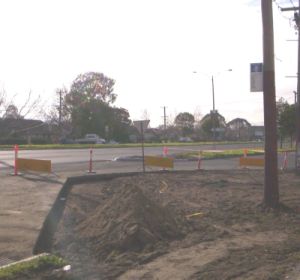
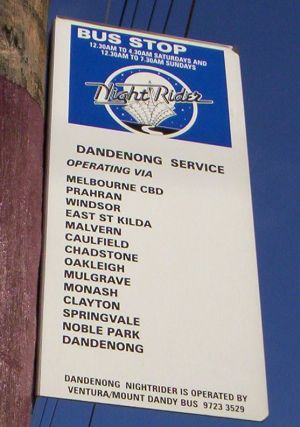
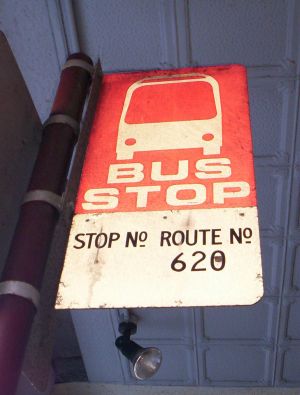


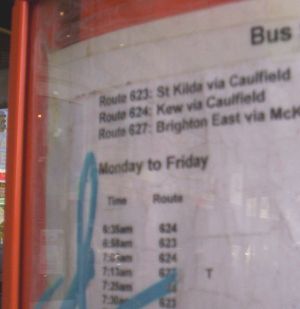
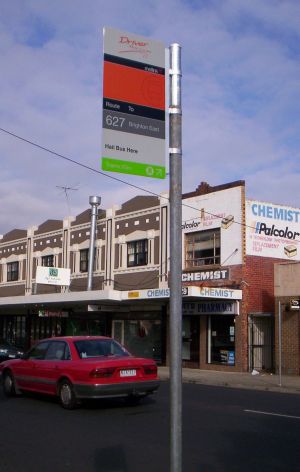
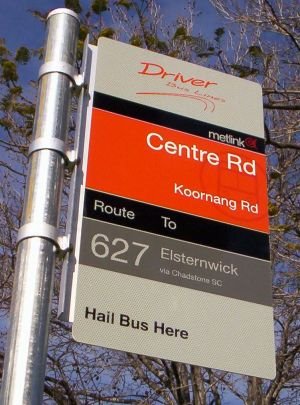
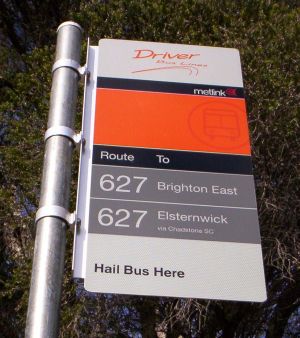

Photographs taken Saturday 12 August, 2006.
Source: MTA/PTC Annual Reports
Rpt Yr | % OT(i) | % OT(ii) | % Canc(iii) | % Canc (iv)
1983 ------ 93 ---------- ? ----------- ? ------------ ?
1984
1985-6 --- 87.8 ------ 84.1 -------- 3.7 -------- 6.0
1987 ------ 92 -------- 86 ---------- 2.8 -------- 3.8
1988 ----- 92.1 ------ 90.2 --------- 2.5 -------- 4.1
1989 ----- 92.1 ------ 86.4 --------- 2.4 -------- 5.2
1990 ----- 88.3 ------ 85.2 --------- 6.3 -------- 7.6
1991
1992
1993
1994 ----- 92.3 -------- ? ---------- 0.3 --------- ?
1995 ----- 92.3 ------ 86.7 --------- 0.5 --------- ?
1996 ----- 93.3 ------ 89.5 --------- 0.5 --------- ?
1997 ----- 94.8 ------ 92.4 --------- 0.9 --------- ?
1998 ----- 93.7 ------ 90.8 --------- 1.4 --------- ?
(i) Percent of trains on time to five minutes (all day)
(ii)Percent of trains on time to five minutes (peak periods)
(iii) Percent of trains cancelled (all day)
(iv) Percent of trains cancelled (peak periods)
General trends
- The long-term average for on-time running is around 93% with few variations.
- Cancellations and service disruptions declined during the late 1980s
but increased greatly around 1990.
- There were unusually low cancellation rates in the 1994 - 1996 period. Subsequent years showed increases, but they remained below their late 1980s levels.
- Current stats are here. These indicate on-time is running at the long-term average and retention of the early 1990s gains in service reliability.
1. Is this bus service for dwarves, drunks or gutter dwellers?
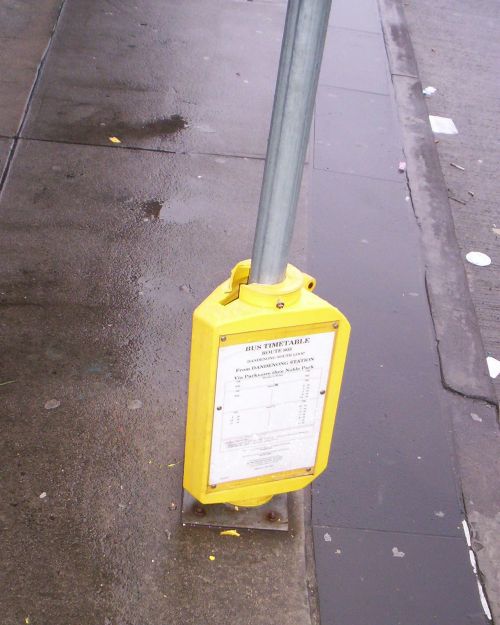
2. The correct answer is no-one; the route was discontinued several months before the photo was taken.

3. A fine example of initiative.
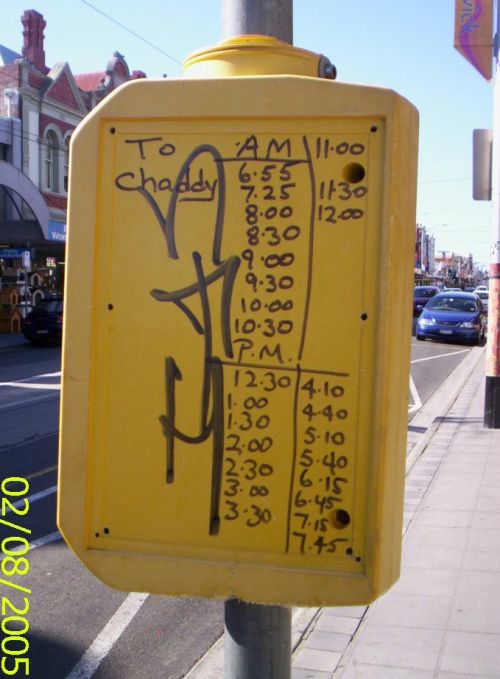
Since replaced by a shiny new (but empty) Metlink timetable case.
4. What do you do if you need a bus to somewhere other than Chadstone?...

... You look around for some daggy but informative Met signs!
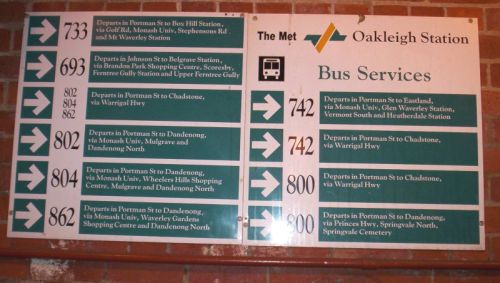
5. Improvements on the way. A new SmartBus passenger information module.

6. How it was done in the old days. An outstanding example of MMTB tram passenger information.
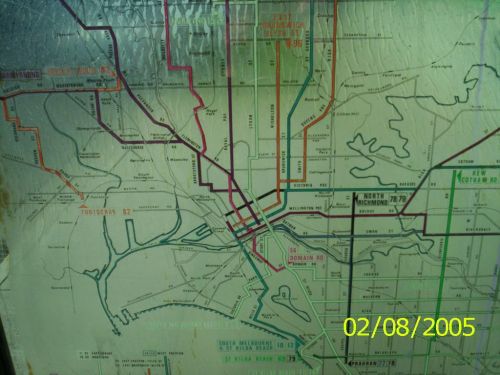
7. The way of the future? 'Best practice' passenger information is network or destination-specific. This compares to current Metlink practice, which is still too operator or route specific. This keeps passengers unaware of high-quality service combinations and results in lower patronage for a given service level.
 example only

